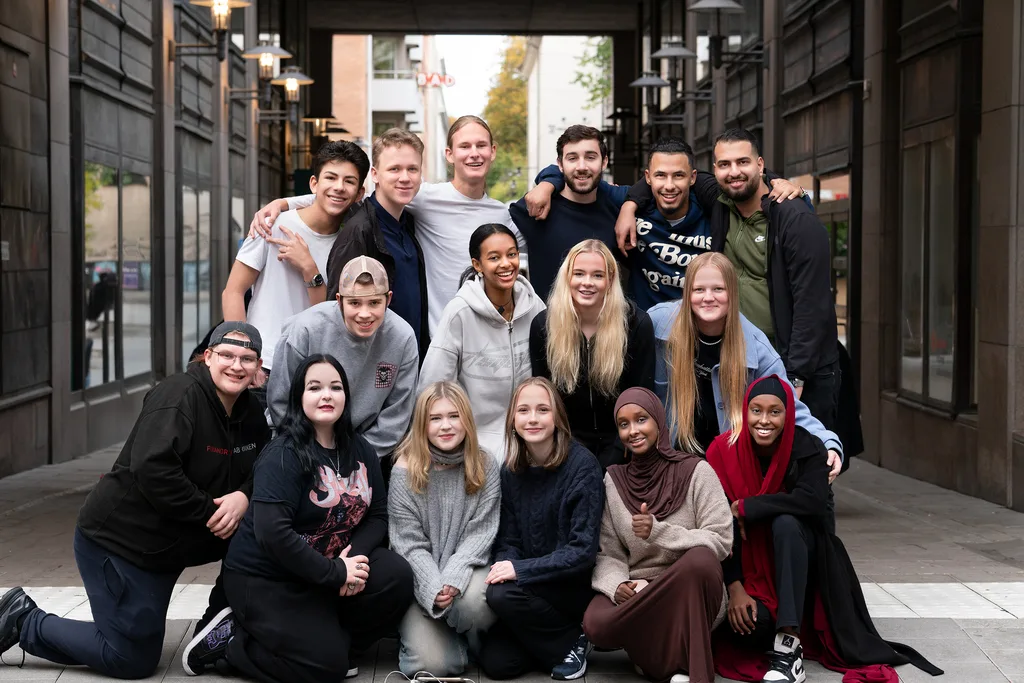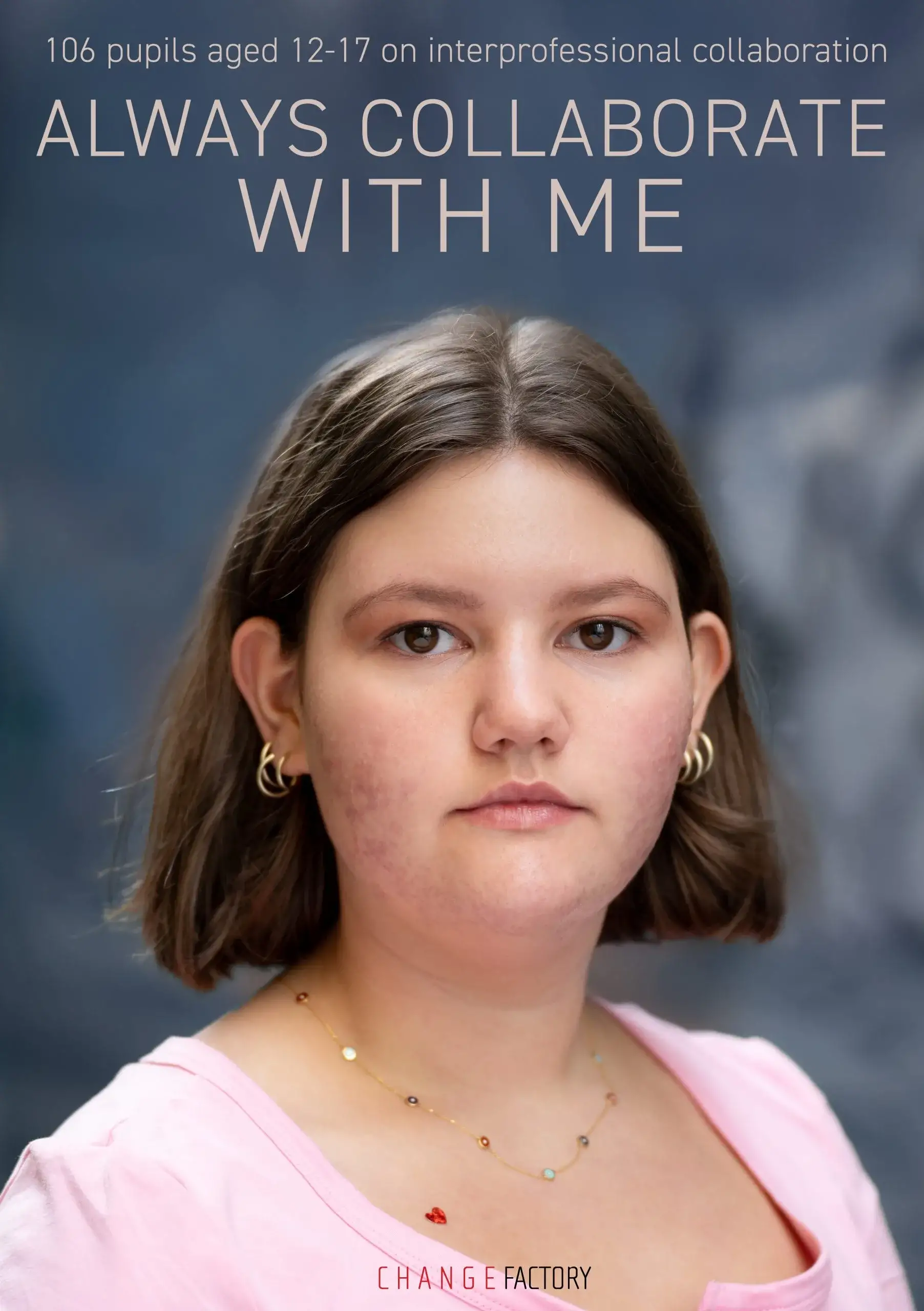
Our vision is that children and young people are viewed as wise and important and have to be included in all decisions and actions regarding them.
Children teaching in higher education
Children directly
No decisions without us
The project will make decision-makers aware of how this right is not sufficiently secured, and why it is important for them to take this right more seriously. A core idea throughout the project is for children and young people to convey their own rights. In the project, young people living in various life situations will be actively involved. This contributes to safe and effective schools, kindergartens, and services, as well as more efficient use of resources within systems for children and young people.
Local Youth Xperts
Our Rights, Our Future
Learn Safely
Nordic Network
New board elected by CF's representative board
Board members Åslaug Krogsæter, Toril Taklo, Marit Ursin, Vanessa Marin Gundersen, Leon Bell, Arne Kristian Myhre, Steffen Iversen. Cathrine Torp was not present when the picture was taken
“The foundation’s board has the overall responsibility for ChangeFactory’s activities. The board shall ensure sound operation and good development in line with the foundation’s purpose. The board shall have broad and comprehensive expertise to safeguard the foundation’s purpose and assist in the development of ChangeFactory Foundation.
The board shall ensure that the management and the organisation satisfy society’s requirements for openness and accountability, and shall work consciously to ensure that partners, stakeholders, employees, and children and young people who are involved can have full confidence in ChangeFactory and its work.”
The board for 2026 consists of:
- Vanessa Marin Gundersen, former Pro in CF and journalism student (Head of the board)
- Arne Kristian Myhre, Chief Physician at the Children and Adolescent Clinic, St. Olav’s Hospital (Deputy Head of the board)
- Marit Ursin, Professor in interdisciplinary childhood and youth studies at the Department of Education and Lifelong Learning, NTNU
- Åslaug Krogsæter, Former teacher, principal, municipal director, education director and process advisor in KS’s (The Norwegian Association of Local and Regional Authorities) elected program
- Steffen Iversen, environmental worker, former football coach and professional football player
- Leon Bell, former Pro in CF and Higher Executive Officer at the Norwegian Civil Affairs Authority and former Pro
- Cathrine Torp, Communications and Strategy Director at The Norwegian Institute of Public Accountants
- Toril Taklo, Head of Department at Child and Adolescent Mental Health Service
The first two board meetings have been held and the board members have divided their areas of responsibility between them.
ChangeFactory’s board of directors with Pros and factory workers
Better decisions when politicians make them together with children
In the project NO DECISIONS WITHOUT US, young people from Denmark, Sweden and Norway have come together for the third time to inspire politicians and other decision-makers to understand and remember how much more effective it would be to make more decisions together with those affected by the decisions.
This Saturday we had a visit from members of parliament and there were nice dialogues between the politicians and young people from the three countries about what politicians and other decision-makers can gain from listening to and taking seriously the views of the groups of children affected by a decision. Over the weekend, the young people have been working on the content for the website, which will be launched in March. Thanks to Nordic Cultural Contact for the support in implementing this project.
Politician Tage Pettersen with young people from CF, Danish School Pupils and Unga Örnar
Politicians Mona Nilsen with young people from CF, Danish School Students and Unga Örnar
Politician Liv Gustavsen with young people from CF, Danish School Students and Unga Örnar
Young people have advice on what makes the police safe
The police, like all other public services, have an obligation to understand the perspectives of groups of children who have experience interacting with the police when practices are being further developed. This is also wise in order to ensure that the police work in ways that are safe and effective from the point of view of children and young people.
Since 2009, Forandringsfabrikken has gathered experiences and advice from young people who have been in contact with the police. Their responses have been summarized in several reports, including “Justicepros” (2010), “Angry on the Outside, Hurting on the Inside” (2020), and “Not Mean – There`s always a reason” (2021).
In recent weeks, young people with experience of interacting with the police on the street have visited preventive units in two different police districts. The focus has been on how the police can work in ways that feel safe for young people while also working effectively.
Some of the topics presented included:
✔️ What characterizes safe police
✔️ Reasons why young people commit crime
✔️ How the police can create safety and build trust
✔️ How to share information about children in ways that are safe and uphold children’s rights
✔️ How to conduct conversations when the police is concerned in ways that feel safe and helpful
Pupils teach students at Lund University
At Lund University in Sweden, students studying to become teachers were visited by upper secondary school pupils in the subject “School Development”. The pupils explained summarised knowledge from many pupils, and then met with the students in smaller groups.
Nordic project at universities
This form of teaching is part of a Nordic collaboration project, with universities in Denmark, Sweden and Norway. Here, ways are being tested where students get to hear knowledge from children and young people – directly from children and young people. The goal is to find ways that work in different places in Nordic countries.
How to collaborate with students
The theme of the day with the students in Lund was collaboration between teachers and pupils, both with individual pupils and with groups of pupils. The young people started by explaining why adults in schools have to collaborate with pupils, and what must be the basis for it to feel safe for pupils to express their opinions. They also explained what adults in schools can do before a decision is made, when pupils have expressed their opinion and after a decision has been made, so that pupils feel that they have truly been involved and taken seriously in the decision. The young people also gave advice on what adults can do if what one or more pupils want is not possible to achieve.
Helpful for the students
The feedback that was most noticeable from the students was that it is very helpful to hear from, and talk to, pupils about how to create safety and good collaboration in practice. Many said that it gave motivation to be a teacher who asks pupils about their opinions and takes their opinions seriously.
Thank you so much to the students and teachers at Lund University for having us!
Municipal leaders must decide with children
Young people from Denmark, Sweden and Norway recently met to make films and online resources for municipal politicians in the Nordic region. They wanted to inspire them to take their share of responsibility for ensuring that children are involved in all decisions that affect them in the municipalities. Earlier this autumn, the session-theme was decisions in schools, and over Christmas the theme will be national decisions.
Children must be taken seriously in all decisions that affect them. This applies to decisions about leisure activities, sports, low-threshold services, assistance services, budgets or when starting new initiatives. The answer that is repeated from children is that when they are allowed to participate in decisions, what is decided can be more accurate. Important? In a time of tighter municipal finances, municipalities must spend money wisely! Thank you to Danske Skoleelever (Denmark) and Unga Örnar (Sweden) for an engaging and good collaboration so far! AND thank you to Nordic Culture Point for the support and the opportunity to carry out this project!
LEARN SAFELY - online resource for teachers, build on advice from each other
How can teachers help students feel safe in the classroom, in group work and in other learning situations?
In the project Learn Safely, around 260 students in Norway and Portugal have shared their experiences and advice – turned into practical tools for teachers and films with advice from students.
The tools show how teachers can:
🧡 Create safety in the classroom
🤝 Collaborate safely with students
👥 Do group work in safe ways
🛑 Stop trouble in safe ways for students
On the online resource Learn Safely you will find films and tools created from advice from students in Norway and Portugal, which show how safety can be created in everyday life at school.
Learn Safely is an Erasmus+ project, created in collaboration between Forandringsfabrikken (Norway) and ComParte (Portugal), with support from the European Union.
For teachers and other adults in school:
👉 Use the website as inspiration and support in your work for safe and inclusive learning situations.
💛 Students know what makes learning safe.
See more here: learnsafely.org
The knowledge festival WHERE CHILDREN PAVE THE WAY
Young people and the Mayor opening the festival
Children and young people have advice and opinions that adults need. Adults need this in order to be able to make good decisions for individual children and for groups of children, in collaboration with children. When adults want to listen, understand and take seriously the advice and opinions from children, actions and decisions concerning children can become wiser and more useful for those concerned.
The Knowledge Festival WHERE CHILDREN PAVE THE WAY happened in Trondheim, Norway. Children, young people and adults have for four days highlighted the knowledge that children themselves have. The mayor, Children and Education Commissioner, municipal council politicians, judges and lawyers, researchers, employees of the state administrator, leaders and professionals in schools, kindergartens, help-services, Youth Outreach Services and the police have participated in dialogues with children and young people with experience from schools, activities and help-services.
The Mayor and pupils from Trondheim
Pros and the County Governor team
Pros and NTNU university
Pros and professionals on stage
The Changemethod is now to be used in several countries
Changefactory (CF) has for more than 15 years invited children and young people around Norway to participate in surveys, using a method called the Changemethod. Authorities, knowledge centers and organisations around Europe have noticed the method for many years. Several now want training in how to use it in their country. CF visited the Netherlands last week to learn about the method. The authorities there are now preparing to conduct more surveys next year.
The Changemethod is closely based on Participatory Learning and Action (PLA), a participatory method used in action research. PLA has been further developed together with young people in Norway, to find tools that engage many children and young people here. The Changemethod takes very seriously that children are different and that groups of children have the right to express their opinion, in ways that are felt safe for them.
Since 2009, more than 16,000 children and young people in Norway have given advice in various types of knowledge acquisition that Changefactory has carried out. Visual and creative tools and dialogues have been used. Both at the beginning and at different periods throughout these years, researchers have been closely linked to the work, especially to CF’s qualitative surveys. In recent years, researchers have also had methodological responsibility for each individual survey.
What kind of knowledge directly from children do students in the Nordic regions need?
Many of the professionals that children and young people will encounter in the future upbringing systems are now studying at universities, to become teachers, kindergarten teachers, health workers, psychologists, doctors, work in child and family welfare, police and several other professions.
What kind of knowledge directly from children do these students need? This question concerns the children and young people that the students will later encounter. They have the right to be taken seriously in this decisions concerning them, according to the Convention on the Rights of the Child (UNCRC). The students, teachers in the higher education programmes, professionals in the services, bureaucrats and politicians also have important voices in this.
Changefactory has worked on these topics for the past decade in Norway, in collaboration with teachers at various universities and educations. Now this work has gone to Nordic countries and higher education programmes in several countries have signed up. Together with teachers, students and organisations around the Nordic region, we will find out what kind of knowledge and in what ways this can be done. This is conducted with the support of Nordplus Horizontal.
Here are some of the teaching methods being tested, based on responses from groups of children and young people and in collaboration with the education programmes:
CO-TEACHING: Young people and professors teach together. In dialogues, they go into depth to find out how young people can be met in safe and useful ways. This has been tested in education programmes for child welfare workers, social workers and psychosocial workers
CASE WITH YOUNG PEOPLE: Students are divided into groups and each group meets a young person who explains a situation and shows how children and young people can express themselves in this situation. In dialogues, they work on how students can best meet young people. This has been tested in education programmes for teachers, psychologists, health workers, child welfare workers, social workers and social workers.
KICK: 4-5 young people visit the education programmes at the very beginning of their education to “kickstart” receiving knowledge from children. The young people explain what constitutes good professionalism, based on the knowledge of many children, and how they think children’s rights under Articles 3, 12 and 16 can be secured in good ways. KICK has been tested in most universities in Norway over the past years, in child welfare, teachers and social worker studies.
We look forward to continuing to gather experiences that can inspire the Nordic region – and Europe!
Schools throughout the Nordic countries must collaborate with pupils
The UN Convention on the Rights of the Child states that children must be taken seriously in all decisions that concern them. This applies not least in school. Children say that this makes school more motivating and gives life more meaning. Children must be collaborated with, in Norway, the Nordic countries and Europe. The Danish Primary School Act can be an inspiration for everyone, it states, among other things:
At each grade level and in each subject, teachers and pedagogues continuously collaborate with the individual pupil to establish the goals that are sought to be achieved. The pupil’s work is organised taking these goals into account. Determining work forms, methods and choice of materials shall, to the greatest extent possible, take place in collaboration between teachers, pedagogues and pupils.
In a Nordic project, with young people from Denmark, Sweden and Norway, we create films and online resources to explain why, and inspire to how, adults in schools can take their share of the responsibility for pupils to be collaborated with. The project then moves on to how children can be collaborated with in local and national decision-making processes.
Thank you to Danske Skoleelever (Danish School Pupils) and Unga Örnar (Young Eagles, Sweden) for an engaging and good collaboration so far!
Parliament politicians and pros from Changefactory thanked each other
A very important goal for Changefactory is to raise knowledge from children to those who make decisions about laws and frameworks for all children in Norway. Pros and factory workers have collaborated with most political parties in the Norwegian Parliament in 2021-2025, and are very grateful for the way politicians in Norway have shown that they want to understand the views of the groups of children that decisions affect. Then there are differences in how these views are included in decisions: how they are assessed, emphasised and how this is documented, here the Parliament still has a way to go.
In June, Pros and young project workers from Changefactory thanked parliamentary politicians from six parties on both the right and left wing. These were great meetings, with different themes because there were different things to thank them for. Very grateful for that!
The election is approaching and Changefactory will keep a close eye on which parties are promoting children’s rights and which are promoting other issues that are important for children in different life situations, and for the future of those who will take over Norway.
The Parliament Committee for Children and Families celebrated party rights from 12 years
The majority of the Parliament Committee for Children and families in the Norwegian Storting decided, as part of the consideration of the quality pledge for child welfare that the age of party rights for children should be lowered to 12 years by 2028 🎊 The committee invited the Foster Home Association, Save the Children, the Child Welfare Institutions Committee, The Norwegian Union of Social Workers and Changefactory to a celebration and as a thank you for having fought to strengthen the legal safeguards for children.
Changefactory has worked for many years to lower the age of party rights. Children must receive more information and the right to contradiction in their own case. Because:
- Party rights from the age of 12 will give children the right to information, to express their opinions about information from different adults and to share what is important. When children are well informed, they can express their views more easily and adults can make better decisions for children.
- Many reports have shown over many years that the Child Protection System is unable to make good enough decisions for children and at the same time ensure children’s procedural rights. The consequences of this have been significant. Therefore, children themselves must be a party to their case.
- The Children’s Committee writes in CO no. 13, para. 63 that involving children is an important part of protecting them.
- From the summarised views of children, party rights from the age of 12 will contribute to making decisions more accurate for children.
THANK YOU to the majority in the Norwegian Parliament, who took this very seriously 🥳
CF presented advice from children at a Nordic conference
Professionals from all Nordic countries gathered for a conference, organised by the Nordic Association against Child Abuse and Neglect. The theme was “Resilience and Trauma – Responsibility and Hope”.
At the conference, Canadian professor Michael Ungar spoke strongly and clearly about resilience. He explained how working with children exposed to trauma can make the path to coping much shorter.
CF held two short presentations and a symposium, the topics were:
💛 Good quality in Barnahus, seen from the perspectives of groups of children
💛 Without safety, without a chance, about the book and solutions going forwards
💛 Changefactory and Joannahuset – about community and human warmth, important ways to find meaning, cope and process trauma
Thank you to the NFBO board for an exciting conference and we look forward to 2027!!
Anniversary and project start in Lisbon
Children and young people up to the age of 18 from all over the Nordic region can now learn about their rights under the UN Convention on the Rights of the Child to be collaborated with and to be taken seriously when decisions are made that affect them 🎉 This is stated in articles 3, 12 and 16 of the UN Convention on the Rights of the Child.
Here is a link to the website: ourrightsourfuture.org
The website was created in the project OUR RIGHTS OUR FUTURE, a collaboration between the organisations Unga Örnar in Sweden, Skunk on Åland and Changefactory in Norway. The work is supported by Nordic Culture Point. The young people in the organisations met physically and digitally, in 2024-2025, to create the content for the website together.
To adults who work with or meet children and young people: Please share the website with as many people as possible. CF knows from several of our projects that many children and young people don’t know their rights in a way that allows them to use them in their everyday lives ❤️ www.ourrightsourfuture.org can help change this 💛
The Children's Committee specially thanked children from Norway
On 12-13th of May, the Norwegian authorities responded to questions from the committee in Geneva. The committee had taken the input from children under 18 in Norway very seriously. The committee justified several of its questions with knowledge from children, in the reports from the Children’s Committee. They thanked children in Norway in particular for having informed the committee in engaging ways. Tavar and Glorija from CF followed the reporting, to follow how the views of children were important in the hearing.
Norway’s reporting began more than a year ago. Civil society and children have contributed all the way. Changefactory has sent reports to the committee in two rounds, on the status of how children’s rights are secured in Norway, from the perspective of different groups of children in vulnerable life situations, in kindergarten and in school. In February, young people under 18 from the Children’s Committee participated in a pre-session, where they presented the reports and received questions from members of the Children’s Committee.
The committee asked questions about:
🤩How Norway intends to ensure that children’s views are included when laws are made
🤩Why Norway has not secured children’s procedural rights in all laws that apply to children
🤩Why Norway has not secured children’s rights better in barnahus
🤩How Norway intends to secure children’s rights in the health laws
THANK YOU to the Children’s Committee for taking children in Norway seriously🥳
Academics from around the world raise children's rights
Changefactory participated in the Biennial Workshop on Developing Research in Children’s Rights and Family Law, which was hosted in the School of Law UCC in Cork Ireland. We met wise, engaged and kind scholars from Japan, the US, Slovakia, Belgium, the Netherlands, the UK and Ireland 🌍
Thanks a lot for two fun days full of discussion on the future of children’s rights!🌟📚⚖️
Seminar about Children in Decision-making in Ireland
Representatives from Hub na nÓg and from the Department of the Taoiseach who explained how children have participated to input into priorities in national budget work.
Ireland is far ahead in the work to systematize taking children and young people seriously in decision-making, at individual and group level. Last week DCEDIY (the Irish Department of Children and Families) invited to an international seminar, to provide information about the work in Ireland and to inspire other authorities and organisations. The different work being done in the different parts of the administration in Ireland and the frameworks they work according to were presented . The Irish center Hub na nÓg, who collects views of children in vulnerable life situations and provides education, also contributed. Laura Lundy’s model for participation has inspired this work.
Professor Laura Lundy together with representatives from the European Commission, OECD and Leon from Forandringsfabrikken
Nordic youth empowerment project (part 2)
How can young people have more influence in decision-making?
This week, young people from the organisations Youth2030 in Sweden, Nuorisoala in Finland and Forandringsfabrikken in Norway met for a workshop to exchange ideas and experiences on how young people can have more influence in decision-making in municipalities, regions and nationally. We met with parliamentarians and local politicians and took what we learned from the dialogues with them into the group work.
THANK YOU especially to all the young people who have participated and contributed and to Youth2030 who coordinated the work
Nordic youth empowerment project (part 1)
When decisions are made for children or young people, decision-makers must find ways to hear the views of those who are affected by what is being decided. Decision-makers in Norway, Sweden and Finland have a long way to go to ensure this commitment. We learned this when young people from Finland, Sweden and Norway met to brainstorm ideas and create strategies that can help distribute power between generations.
Young people from Changefactory were recently in Finland together with young people from Youth2030 LAC and Nouriisala to exchange knowledge on how to increase young people’s influence. The workshop was part of “Nordic Youth Empowerment Project”, funded by Nordic Culture Point.
THANK YOU to YOUTH 2030 for initiating this exciting work, and we look forward to continuing the work and seeing you again!
New professional councils for 2025
Changefactory has several professional councils. The members provide advice on strategic choices and priorities. They also provide concrete input on how knowledge from children can be used wisely, together with research and practical knowledge. We look forward to important dialogues and to receiving input!
These councils consist of talented professionals from different parts of the fields. They come from educational institutions, practices and organizations.
We are so excited to collaborate with our four new professional councils in 2025!
See lists of members below
Professional council for children’s rights
Kirsten Sandberg, Professor Emerita at the Department of Public Law, Faculty of Law, University of Oslo
Lena Bendiksen, Professor at the Faculty of Law, UiT The Arctic University of Norway
Lars Marius Heggberget, Municipal Attorney Trondheim
Christian Børge Sørensen, Chairman of the Board and Special Advisor in Human Rights
Randi Sigurdsen, Professor of Law, Department of Health, Social and Welfare Sciences. Faculty of Health and Social Sciences, University of Southeast Norway
Anna Nylund, Professor and Head of the Research Group for Civil Procedure at the Faculty of Law, University of Bergen
Lise Gro Søreide, District Court Judge Hordaland District Court, Bergen
Professional council for school and kindergarten
Jon Halvdan Lenning, Bullying Ombudsman in Troms County Council
Åshild Viken Wåle, Senior Lecturer in Pedagogy and Deputy Head of Department at the Department of Pedagogy USN
Marit Mjøs, Associate Professor in Pedagogy at NLA University College
Marianne Dahlseng, Office Manager at the Secretariat of FUB and FUG
Solveig Østrem, Professor of Pedagogy at the Department of Kindergarten Teacher Education at OsloMet – Metropolitan University
Ingeborg Hellesnes Uppheim, Municipal Manager for Early Childhood Education in Voss County
Marianne Kolobekken, Principal at Fjellhamar School in Lørenskog Municipality
Erlend Berrum, Principal at Ingieråsen Junior High School in Nordre Follo Municipality
Elisabeth Walsøe Lehn, Senior Lecturer in Pedagogy at Queen Maud’s Memorial University College
Tore Tverbakk, Head of Kindergarten and School in Bodø Municipality
Joakim Caspersen, Sociologist and Head of Research at NTNU Social Research
Rolf Øistein Barman-Jenssen, Head of Unit for Educational Psychological Services (PPT) in Tromsø Municipality
Professional council for children and families
Ingunn Tollisen Ellingsen, Head of the Welfare Research Network, University of Stavanger
Vegard Snartland, Associate Professor / Program Coordinator USN
Gro Ulset, Researcher at RKBU Midt-Norway, NTNU
Reidun Follesø, Professor of Child Welfare
Mogens Albæk, Psychologist, PhD
Inge Nordhaug, Clinical Social Worker in Child and Adolescent Psychiatry
Nina Bolstad, Head of the Knowledge Center at the Agency for Children and Families
Kathrine Wolla, Head of Child Welfare
Tone Mortensen, Head of Child Welfare
Sissel Mary Frotjold, Head of Child Welfare
Arne Veivåg, Head of Stavanger Emergency Center, Bufetat
Rønnaug Helene Frøiland, Director of the Agency for Children and Families – Bergen Municipality
Professional council for health
Grete Willumsen, Head of the Child and Family Unit, Bodø Municipality
Ane Ugland Albæk, Associate Professor and Postdoctoral Fellow at the Department of Psychosocial Health, UiA- University of Agder.
Camilla Wright, Head of the Outpatient Section, Trondheim Municipality
Stine Reiersen, Special Policy Advisor at the Norwegian Psychological Association
Kjersti Lillevoll, Associate Professor at the Department of Psychology, UiT – The Arctic University of Norway.
Berit Bartnes, General Practitioner, Nardosletta Medical Center
Arne Kristian Myhre, Specialist in Pediatrics, with special expertise in Social Pediatrics, Consultant at the Children and Adolescent Clinic, St. Olavs Hospital
Trond Velken, Specialist in psychiatry and child and adolescent psychiatry and department head at BUPA, Vestfold Hospital
Miriam Skjæveland Håland, Head, Youth Resource Center, Sandnes Municipality
Ann Karin Swang, Head of the National Group of Public Health Nurses
Kari Dehli Halvorsen, Business Manager at Knutepunkt Strømsø in Drammen
Stig Bjønness, Associate Professor, UiS – University of Stavanger, Faculty of Health Sciences
What are child-friendly processes?
Great to work with talented professionals from the Child Welfare and Health Board, and the courts in Bergen Municipality.
CF recently met with the The Child Welfare Tribunal, judges of Norwegian Courts and the Municipality of Bergen in a workshop. The Centre for Discretion and Paternalism (DIPA) at UiB owns the project and this time the theme was CHILD-FRIENDLY PROCESSES.
How can decisions by the child protection system, the Child Welfare and Health Board and the courts work in a child-friendly way? What does it mean that something is child-friendly? What knowledge has to be the basis in order to call something child-friendly?
The Convention on the Rights of the Child (UNCRC) take precedence when other Norwegian legislation (special laws) conflicts with the UNCRC. What significance should the UNCRC and the general comments related to the Convention have in discussions about child-friendliness.
The Supreme Court of Norway has said that general comments should be given great weight where it says “shall”. The general comments describe what child-friendliness means. Should this then be given great weight? Such discussions must take place in the PARTICIPATION project, but also in other development work and projects that concern children in vulnerable life situations.
Exciting trip to Belgium and the Netherlands, here from the University of Leiden
PARTICIPATION is a very 🤩exciting🤩 collaborative project between researchers at the University of Bergen, the DIPA Center, and four key partners to ensure good child protection services: 1)The Child Welfare Tribunal, 2) The Norwegian courts and their administration, 3) Bergen Municipality and 4) Changefactory (children and young people).
The following week, members of the Child Welfare Tribunal went to Belgium and the Netherlands to learn more about child-friendly processes. CF participated, to contribute with questions, from the perspective of children. The group visited courts and universities, and the topic was how the rooms and the conduct of conversations with children must be, to be called child-friendly. An important topic was also methods for including children in this work.
Link to the project: https://discretion.uib.no/childrens-right-to-participation/
UN Children's Committee held children's meeting
The Children’s Committee from the Children’s Report, the Forum for the Children’s Convention and Pros from CF.
In May, the Norwegian authorities will be “examined” by the UN Committee on the rights of the child in Geneva. Norway will then receive recommendations on how children’s rights can be better secured. This is based on input the UN Committee has received from organisations, Norway’s National human rights institution(NIM), the Civil Ombudsperson and the Children’s Ombudsperson 🤩
Bragi Guðbrandsson and Mary Beloff from the children’s committee with Pros and factory workers
Chair of the Children’s Committee, Ann Skelton, with Pros
Part of something bigger
NIM, the Children’s Ombudsperson, the Forum for the Convention on the Rights of the Child, the Stine Sofie Foundation and Changefactory were represented at the 100th Pre-session in Geneva.
The Forum for the Convention on the Rights of the Child (FFB) represents over 50 organisations working for children’s rights in Norway. They have produced a report and a children’s report, the other actors have produced their own reports.
The UN Committee on the Rights of the Child had invited children under 18 to a separate CHILDREN’S MEETING. Some of what children from Changefactory presented, based on views from different representative groups of children, in CF’s reports:
💫The authorities today do not ensure Article 12 well enough when measures, initiatives and frameworks are to be determined. Views from representative groups of children under 18 are rarely described, and then not openly considered or shown how they have been taken into account.
💫Too many children in Norway have too little trust in adults, to be able to speak safely or express themselves freely as stated in the Convention on the Rights of the Child, because the legislation does not ensure that children can tell, without the information they say being shared before it is agreed with the child
💫Norwegian laws do not describe children’s procedural rights in context, with the exception of the Child Welfare Act
💫The authorities justify the use of physical force, isolation, body searches, locked institutions and surveillance of children by saying that it must be done to protect, provide care and because it is in the best interests of the child. They are not allowed to do that!
We look forward to May when the UN Committee on the Rights of the Child will challenge Norway on how to ensure children’s rights ☺️
Denmark has its own crisis center for children
From left: Chairman of the CF Board Alexander, Manager of Joannahuset Jette, Lawyer Marie, Development officer Tescha, together with Pros and factory workers from CF
Joannahuset is Denmark’s first crisis center for children. THANK YOU for the inspiring visit!
Last week we had an anticipated visit from Joannahuset from Denmark. Joannahuset is Denmark’s first crisis center for children. We have previously visited Joannahuset and talked to young people who have been there. There, children and young people under the age of 18 can get a place to sleep and legal assistance. Children can stay at the crisis center for 48 hours without the caregivers having to consent, but they are informed that the child is at the crisis center.
There are of course different opinions about this, because Joannahuset is a pioneer for children, also in a European context. Johannahuset is an inspiration and a great wish would be for Norway to have a Johannahuset
Party leader Erna receives "Without Safety, Without a Chance"
Thank you, the book will be read thoroughly, Erna said.
Several of the book’s authors met Erna Solberg yesterday to give her the book. Afterwards, she wrote this on Instagram:
Today I met 4 young people from Changefactory, who have been involved in creating this book. Their experiences with the help and treatment system, told by themselves. An extremely important perspective to have both in designing child welfare and mental health services.
The patient and user perspective is important in both helping adults and children, but children may need it even more. It is easier to overlook a young person’s point of view than an adult’s and adults often have a “more developed” conceptual framework. We in the Conservative Party have presented a plan for better mental health, which we call Help that helps – the young people said their goal was help that works. It will be useful to read this. Because as the young people said when we met – We who are standing here have each cost society millions, but the help has not worked. Now we want to help make the help work. Thank you, I will read thoroughly.
THANK YOU Erna for a nice talk and for wanting to read the book and work to make the help work!! 🌟
The UN Convention on the rights of the child says that children must be taken seriously in decision-making
Laura Lundy visited Norway last October. She inspired many, with her clear message that children under 18 must be taken seriously in decision-making. This applies to every individual child in kindergarten, school, help services, the police and the legal system. It also applies to the groups of children under 18 that are affected, when measures, initiatives and frameworks are to be determined.
Here’s a video with inspiration from Laura Lundy
A grateful minister for children
Minister for Children Kjersti Toppe was at the top of the list of those whom the authors would most like to understand the main aim of the book and the important explanations for the major challenges. These are challenges that exist in Norway related to young people who struggle and who end up in strong support systems. Equally important for the authors who met with the Minister for Children, was for her to understand all the possibilities that now exist, through the concrete solutions proposed in the book. And that both she and the ministry familiarise themselves with these. The authors asked her to consider the proposals carefully in the final part of the work on the Quality Reform. Kjersti and Maren thanked warmly for the book and promised to read it as best they could. Thank you for a great time with you!
Important people have received "Without Safety, Without a Chance"
The Minister for Children, the Children’s Ombudsperson, the Health Inspectorate, the Norwegian Psychological Association and the Norwegian Bar Association have all been given the book “Without safety, without a chance”. They have said that they will read the book, and they have thanked the authors for their work and their courage. In these meetings there have been talk of solutions, and how knowledge in this book can be a big contribution to systems for children and young people improving how they help them.
The Minister for Children, Kjersti Toppe, and authors
The Children’s Ombudsperson, Mina Gerhardsen, and authors
President of the Norwegian Psychological Association, Håkon Skard, and authors
Director of the Norwegian Health Inspectorate, Sjur Lehmann, and authors
Editor Wenche Bjørnebekk and team leader Hilde Erika Lund from the Scandinavian University Press, and authors
Martin Nielsen, Mette Yvonne Larsen and Ida Thommessen from the Norwegian Bar Association, and authors
Foreword "Without Safety, Without a Chance" by Trond F. Aarre
Trond F. Aarre together with five of the book’s eleven authors
“In the first part of this book, eleven young people write about the difficulties they have had in their lives, and how they have experienced measures that were supposed to help them. It is a shocking read. Services that were supposed to be good help have been experienced as the opposite. Young people who needed to be listened to and understood have felt that adults were not concerned with why they were having such a difficult time. Nor were the adults always interested in hearing their views on what could help.
The stories are naturally one-sided, as all credible stories are. The authors are not looking for objective, cold facts. They show us the services from their perspective, and they know very well that there are other ways of looking at this. They understand that it can be difficult to help, and that legislation and organisation set limits to what can be achieved. But something that is repeated in many of the stories is that they do not fully get to express themselves and do not receive the help they need to feel safe.
The quotes from journals, records and reports show us how great a distance there can be between what professionals are concerned with and what young people themselves experience. Regardless of whether the professionals are right from their perspective, the experiences of young people cannot be without interest. Measures that are experienced as useless are rarely of great help. The experiences, of the past and present, of relations and measures, are often absolutely central to understanding what the problem is about. We need to know of these experiences, even when they do not fit well with the services’ understanding of themselves. Knowledge of how services are experienced by those who will use them is indispensable knowledge for those who want to improve and develop the services.
In the second part of the book, the young people summarise the difficulties that can be experienced in dealing with the systems. This is based on their own experiences, but also on the results of surveys conducted by Changefactory, in which several thousand children and young people in public services have participated. Lastly comes what may be the most important thing in this book: the call to learn from the experiences the young people have had, and proposals for solutions. They want to help the services to meet young people who come after them, in ways that they themselves would like to have been met. They ask for a different form of professionalism than the one they themselves encountered.
The eleven young people therefore deserve congratulations and thanks for wanting to share their experiences with us. It is commendable that they are not content with pointing out what is not working so well, but also come up with proposals for how things can be improved. As I understand them, they are not concerned with getting revenge or redress, but want to do what they can to ensure that services are better for those who come after them. To achieve this, they must explain how things are connected. They must be allowed to describe what they have been subjected to, how they were met, and what is needed to make things better.
Most of the young people appear as authors with names and pictures. This has been each individual’s choice. I can assure the reader that they know what they are doing. Most have been active in Changefactory’s work to convey the views of children and young people on how school, child welfare, police and health services work for them. I know several of them personally through many years of collaboration with Changefactory. The individual author or their guardians have done what they thought was best, without others influencing their choice. We must believe that they themselves know what is best for them.
Changefactory has done pioneering work over the past 20 years by collecting experiences from young people’s contact with public services. There are few countries that can point to anything similar. I am currently a board member of Changefactory and have a special responsibility to ensure that it is safe for children and young people to participate in Changefactory’s many activities. I know the routines and the work the organisation does to ensure that it is safe to participate. The young people who come forward with their names and pictures know what it means. They believe that it is they themselves who should make this choice. I agree with that.
I myself am critical of many of the mediacoverage in which more or less well-known people “come forward” with the ailments they have. This book is about something different and more important. The eleven young authors do not want to get attention or sympathy from others. They are not looking to “give the disease a face” or raise awareness about one or another problem they have struggled with. As I understand it, they present themselves with names and pictures because anonymity does not serve their cause. They would rather be individuals – living people with their own identity, each with their own values and preferences, each with their own personal story and each with their own difficulties. In their encounters with help services, they have experienced to a greater extent that they have been seen as representatives of a group of people, rather than as individuals with unique, personal stories.
I hope that you, who read the book, will be open to the authors’ experiences. They should be food for thought for everyone who works in the support system, and those who are responsible for managing the services. The experiences indicate that it is useful to think a little differently about the services and about those whom the services are intended to help. It seems obvious that the way in which young people are met does not always work as intended.
This is a challenge for all of us. The authors should be commended for doing their part to ensure that students, professionals, leaders and governments can see that much needs to change. But even if much in this book may seem negative, I would like to remind you that we live in good times – and finally take into account what the users of the services think. This is the only way we can change what the help services offer for the better. In order to do so, the experiences of people must emerge. This must also apply to those who are young and therefore have not always been listened to by those of us who think we are older and wiser. This is an important book that shows both how services can affect children and young people, and how they can be improved.
Les Arcs-sur-Argens, May 2024″
Trond F. Aarre,
specialist in psychiatry and drug and addiction medicine
Without safety, without a chance
11 young people are the authors of a new book at Scandinavian University Press (Universitetsforlaget). There are 11 of us who have used drugs, run away, had eating disorders, used violence, committed crimes and attempted suicide. We have been locked up, held down, forcibly medicated and been moved around a lot.
This book has been written to help more children and young people get help that helps them, to have lives worth living. We have to be met as people who need safety. Without safety, without a chance.
Each of us has cost the state millions of Norwegian kroner every year. At the same time, we have lost precious time in our lives. Much of the help we received created damage in us, both then and later in life. Without safety, without a chance
The book provides clear solution proposals based on answers from CF’s surveys. It provides valuable advice on how to meet young people in vulnerable life situations. It is written for politicians, authorities, managers, professionals and students. When we felt safer, we could accept help and have lives worth living.
See, browse and buy the book here
Norway uses the Child Rights Convention against its purpose
For children and young people, the Convention on the Rights of the Child (UNCRC) is a document of freedom. The purpose of the UNCRC is to give children rights. When authorities use children’s right to care, protection and the best interests of the child to justify law and policy to allow the use of physical force, restrictions on freedom of movement, or the use of isolation towards children, the UNCRC is being used against its purpose. This cannot be done this way.
Maria Grahn-Farley has visited Norway. She is an expert in children’s rights, a Swedish law professor with a doctorate from Harvard Law School and a Master of Laws (LL.M.). She is a visiting professor at the University of Gothenburg, has worked at universities in England, USA and Sweden and now coordinator of the EU-funded research project HRJust which works in 10 countries. The project looks at how States use human rights to explain and defend their decisions and actions and the consequences of when States use human rights as a governance instrument. In 2021, Maria was awarded the Scandinavian Human Dignity Award for her efforts for children’s rights and human trafficking of children. She is often engaged by Swedish authorities and the judiciary to give lectures on children’s rights.
Maria Grahn-Farley shared important messages:
The UNCRC exists to give children rights, not to take away their rights
The best interest of the child, the child’s right to protection and care can never be used as justification for the use of physical force, restrictions on freedom of movement, or the use of isolation towards children
Changefactory has conducted research with children and young people for over 15 years. In the surveys, children and young people have explained how adults have justified decisions about the use of physical force, restrictions on freedom of movement, or the use of isolation towards children with the justification that it was in the “child’s best interest”. They have wondered how adults can make harmful decisions on their behalf and then call it “the best interests of the child”.
Children and young people in institutions have explained that physical force, restrictions on freedom of movement, or the use of isolation towards children
Destroy the child’s trust in the adult who does it, but also in other adults in institutions
Give flashbacks and nightmares and retraumatize
Creating fear of the adults and thoughts that they will hurt them
Use of physical force, restrictions on freedom of movement, or the use of isolation towards children can also make life after institution difficult. The injuries can remain in the body for many years.
The authorities in Norway have in recent years used UNCRC art. 3 on the best interests of the child and other articles such as the child’s right to health, development, protection and care as justification and justification for restricting, among other things, the child’s right to freedom of movement, the child’s right to personal integrity, the child’s right to privacy and the child’s right to protection from violence. The Convention on the Rights of the Child is then used against its original purpose, to restricts the rights it gives to children.
Some examples of where this is done:
The assessments the The Ministry of Children and families of Chapter 10 of the Child Welfare Act on child welfare institutions
The assessments by the Ministry of Education and Research regarding access to physical intervention in the Education Act
The Ministry of Justice and Public Security and various parliamentary representatives’ proposals for locked institutions
When the authorities wish to infringe upon children’s fundamental rights or to permit the use of physical force against children, this must be handled in the same way as it would be for adults. They must acknowledge that it constitutes an infringement on a right and take responsibility for the choices they make.
Hearings in the Norwegian Parliament
In Norway, the Parliament invites to public hearings. To participate, organisations like Changefactory (CF) must apply for a place 🔖CF is an organisation that works to collect experiences and advice from representative groups of children and young people, about systems they have experience with. We summarise this as “knowledge from children”. This knowledge is presented by Pros (young people) from CF, in the hearings☺️❤️
In recent weeks, there have been hearings about the state budget for 2025📊Pros from CF have explained their point of view, and given input, from children and young people who are affected by the budget👏🏼 This has been well received, and after the hearings the young people were asked questions, both verbally and in writing 🤩
CF uses the public hearings as a way of helping Norway follow the UNCRC, which says that when decisions about children (under the age of 18) are to be made, the decision-makers must have spoken to *representative* groups of children and young people to whom the decision concerns❤️🔥Therefore, CF always gives input based on answers from children and young people regarding the matter, and make sure that enough children have been spoken to🥰
Laura Lundy inspired Norway on October 24th, and we are grateful
On 24 October, on UN Day itself, Oslo was visited by Professor Laura Lundy. We believe this marked the start of a new era in Norway for Article 12 of the Convention on the Rights of the Child.
Norway is good at many of children’s rights, but not at Article 12. You should, and can be. There is no question if this should be done, only how. Norway should build further on good experiences made by different stakeholder, Laura says.
Laura Lundy from Northern Ireland has inspired more than 10 countries in and outside Europe to take major steps to ensure that affected groups of children under the age of 18 are involved in all important decisions that affect them, both locally and nationally. She has also inspired the World Health Organisation (WHO) and guided the European Commission.
Laura has written the book “Voice is not enough” where she emphasises that a society must listen to the views of children and young people, assess and emphasise this, and give them real influence in decisions that concern them as a group. She particularly emphasises the importance of involving groups of children in vulnerable life situations. Laura has developed a model to guide anyone who makes decisions for children, at a national or local level, or in the everyday lives of children. The model is rights-based and emphasises the responsibility that politicians in the parliament, ministries, directorates, municipalities, educational institutions, services, schools, organisations and many more have.
MANY GOOD PEOPLE CONTRIBUTED TO THE PROGRAMME ON OCTOBER 24TH:
Laura Lundy, Co-Director of the Center for Children’s Rights, Professor of Children’s Rights at Queen’s University, Belfast and Professor of Law at University College Cork.
Eli Blakstad (The Centre Party), State Secretary in the Ministry of Children and Families
Grunde Almeland (The Liberal Party), leader of the Family Committee at the Parliament
Ragnhild Male Hartviksen (The Labour Party) parliamentary politician in the Justice Committee
Mina Gerhardsen, children’s representative
Jon Christian Fløysvik Nordrum, researcher Department of Public Law University in Oslo
Sjur Lehmann, director of the Norwegian Health Authority
Christian Børge Sørensen, special advisor for human rights
Elin Saga Kjørholt, senior subject advisor from the Children’s Ombudsperson
Marit Skivenes, professor of political science and part of CF’s board
Arild Bjørndal, professor of social medicine and part of CF’s board
Leon, Vanessa, Glorija, Dania and Celina from CF contributed in dialogues.
THANK YOU for all engaged, wise, solution-focused and forward-looking talks. The theme throughout was how children can contribute to the development of schools and services, initiatives, budgets, legislation and other types of measures.
Many promised that decisions will be better when we include children’s solutions, that children must be involved early enough in decisions, and that you must be open and transparent with how you have assessed and emphasised children’s views. Something that also came up was what mechanisms we should have to stop decisions when we have not first secured the obligation in Article 12 to hear and take seriously the views of children.
Many were grateful that Laura put into words that Norway is not good at involving the groups of children in question and is far from good enough to ensure that children under the age of 18 and children in vulnerable life situations are included in decisions. Now there are many of us who will achieve this together in Norway in the future!
Today’s keynote speeches inspired both presentation and dialogue
Ragnhild Male Hartviksen, politician in the justice committee at the Parliament, with Laura Lundy and young people in CF
Many good people contributed to the program on October 24th:
Laura Lundy, Co-Director of the Center for Children’s Rights, Professor of Children’s Rights at Queen’s University, Belfast and Professor of Law at University College Cork.
Eli Blakstad (The Centre Party), State Secretary in the Ministry of Children and Families
Grunde Almeland (The Liberal Party), leader of the Family Committee at the Parliament
Ragnhild Male Hartviksen (The Labour Party) parliamentary politician in the Justice Committee
Mina Gerhardsen, children’s representative
Jon Christian Fløysvik Nordrum, researcher Department of Public Law University in Oslo
Sjur Lehmann, director of the Norwegian Health Authority
Christian Børge Sørensen, special advisor for human rights
Elin Saga Kjørholt, senior subject advisor from the Children’s Ombudsperson
Marit Skivenes, professor of political science and part of CF’s board
Arild Bjørndal, professor of social medicine and part of CF’s board
Leon, Vanessa, Glorija, Dania and Celina from CF contributed in dialogues.
THANK YOU for all engaged, wise, solution-focused and forward-looking talks. The theme throughout was how children can contribute to the development of schools and services, initiatives, budgets, legislation and other types of measures.
Many promised that decisions will be better when we include children’s solutions, that children must be involved early enough in decisions, and that you must be open and transparent with how you have assessed and emphasised children’s views. Something that also came up was what mechanisms we should have to stop decisions when we have not first secured the obligation in Article 12 to hear and take seriously the views of children.
Many were grateful that Laura put into words that Norway is not good at involving the groups of children in question and is far from good enough to ensure that children under the age of 18 and children in vulnerable life situations are included in decisions. Now there are many of us who will achieve this together in Norway in the future!
Eli Blakstad, State Secretary in the Ministry of Children and Families, with young people in CF
Politicians in the Family and Culture committee, with Lundy and young people in CF
Sjur Lehmann, director of the Norwegian Health Authority, with young people in CF
Mina Gerhardsen, Children’s Ombudsperson, with young people in CF
T H A N K Y O U for all engaged, wise, solution-focused and forward-looking talks. The theme throughout was how children can contribute to the development of schools and services, initiatives, budgets, legislation and other types of measures.
Many promised that decisions will be better when we include children’s solutions, that children must be involved early enough in decisions, and that you must be open and transparent with how you have assessed and emphasised children’s views. Something that also came up was what mechanisms we should have to stop decisions when we have not first secured the obligation in Article 12 to hear and take seriously the views of children.
Many were grateful that Laura put into words that Norway is not good at involving the groups of children in question and is far from good enough to ensure that children under the age of 18 and children in vulnerable life situations are included in decisions. Now there are many of us who will achieve this together in Norway in the future!
Dialogue with contributions from both the audience and the stage, about challenges today and opportunities for how Norway can better secure the obligations under Article 12 of the UNCRC in the future
Contributors from the last part of the day, with Lundy and young people in CF
Young people gathered to promote children's rights
Young people from Unga Örnar in Sweden, Skunk in Åland, and Forandringsfabrikken (Changefactory) in Norway, gathered in Stockholm. The three organisations are currently collaborating on the project “Our rights, our future”, funded by Nordic Culture Point.
The aim of the project is to promote children’s rights to young people under the age of 18 and to adults working with children. A core idea is for children and young people to convey their own rights to other children and young people. In this project, young people living in various life situations will be actively involved in creating information materials to raise awareness, inspire, and educate. When children and adults are aware of children’s rights, it can prevent violations and contribute to strengthening the rights.
Throughout the weekend, the young people have made posters, videos and audio recordings,in preparation to create a website which explains children’s rights to children, and adults working with children.
Thank you so much to the young people and adults working together on this project. We can’t wait to continue the work and are excited for the results to make an impact on all Nordic countries.
Our Nordic network meets in Copenhagen
Our Nordic Network, consisting of Forandringsfabrikken (Changefactory) from Norway, Pesäpuu from Finland, Knas Hemma from Sweden and De Anbragtes Vilkår from Denmark, had our second physical meeting – this time in Copenhagen.
The four organisations all work with children who are currently in, or have been, in the Child Protection System/care system. The main aim of the network is to exchange experiences and ideas between different organisations, to strengthen the voice, importance and rights of young people in vulnerable life situations in educational programmes and professional practice in the social welfare- and health-fields.
Young people from the four Nordic countries gathered, with the aim to find common principles for good practice for the Child Protection System and care system, through advice repeated by young people in the four different countries.
A big thank you to Nordic Culture Point for funding our work to create a Nordic Network. We are thankful for the connections and the community we have made together, and look forward to further collaboration!
Pupils in Portugal and Norway give advice about learning
Pupils have both in Changefactory’s and ComParte from Portugal’s work told about how safety in class and at school determines how much they learn. With funds from Erasmus+, we are now collaborating on a project together. The aim is to collect the pupils’ answers about what feels safe in different learning situations.
Throughout the year, pupils from around Norway and around Portugal will participate and develop tools based on the answers from the advice collection. The tools will later be tested in schools and then further developed. They will eventually become part of a platform that can be used in Norway and Portugal, and as inspiration in other countries. It’s so exciting to travel around to schools and meet wise pupils who have so much important knowledge about how the school feels and how pupils can learn better🤩 Here in Norway we are looking forward to hearing the answers from pupils in Portugal!
Pupils who have given advice in the project
Meeting with young people and employees in ComParte, Changefactory, and national authorities in Portugal
Anniversary and project start in Lisbon
Changefactory has a sister organisation in Portugal. ComParte is 10 years old this year, when Changefactory is 20 years old. Combined we have gathered experiences and advice from children and young people in Norway and Portugal for 30 years!!!🥳 This had to be celebrated, and so we had a meeting between pros, kickstart of a project together, and dialogues with national authorities in Portugal.
Pupils have, in both CF’s and ComParte’s work, explained how feeling safe in class and at school is fundamental for learning well. With funding from Erasmus+, we are now doing a project together. The goal is to gather pupils answers on how school can become a more safe space for pupils to learn. We received input from national school authorities and The National Commission for the Promotion of the Rights and the Protection of Children and Young People.
THANK YOUUU to pros and the team in ComParte, for wonderful and educational days together, and for the wonderful work you do for children and young people in Portugal🥰 We look forward to meeting in Norway next time. And CHEEEEERS to new decades🌟
Motivating meeting with jurists in Stockholm
At the University of Stockholm, there are skilled jurists who focus on children’s rights and autonomy. As part of the anniversary celebration, we went there to learn from them ❤️
For more than 15 years, children and young people in Norway have explained in surveys that adults make too many decisions that do not improve things for children. Why does this happen? And when adults make mistakes, should it not be discussed? How can trust from children to adults be maintained? Can we continue with adults saying they have made decisions in the child’s best interest when it often does not improve things for the child? We talked to the lawyers about how legislation and other frameworks must be in place for better decisions to be made for children.
THANK YOU to Pernilla, Dennis, and Tim, for great conversations and for emphasising the importance of taking children seriously, this gives hope 🥳
Young people from Changefactory meet decision-makers in Nittedal and Voss
In the fall of 2023, Changefactory received support from the European Youth Foundation of the Council of Europe for a tool aimed at improving the accuracy of decisions and thus increasing the quality of systems for children and youth. This is done by inviting young people to develop a tool for political and administrative decision-makers to receive summarised advice directly from children and young people themselves. The advice can be part of the knowledge foundation for decisions that are important to them. This simultaneously contributes to ensuring the human rights of children and young people as a group.
In February and March, young people and adults from Changefactory visited decision-makers in two municipalities. During the meetings, young people presented concrete proposals on how politicians and decision-makers can involve MANY, DIFFERENT children and young people in important decisions the municipality needs to make. The young people then engaged in a dialogue with the decision-makers on how these tools can be used in practice.
THANK YOU to the decision-makers in Nittedal and Voss who are participating in this exciting work!
Nordic weekend with youth organisations
Young people from four Nordic countries gathered in Oslo for a weekend. They are from Sweden, Finland, Denmark and Norway, from the organisations Knas Hemma, De Anbragtes Vilkår, Pesäpuu and Forandringsfabrikken. This was the beginning of the establishment of a nordic network for young people in vulnerable life situations.
The young people have; discussed challenges in the systems in the four different countries; shared experiences about their roles in their organisations in terms of affecting policy, professional practice and education systems; and planned future activities.
It’s very motivating to collaborate with young people across different countries to make the systems designed for children and youth, and relevant higher education programmes, as optimal as possible for children. We are very grateful for a wonderful, knowledgeable and powerful weekend!
The Evidence and Implementation Summit 2023, in Sydney Australia
The conference is now over – THANK YOU to so many interesting speakers for sharing exciting work and ideas! Changefactory had the pleasure of sharing two films that were received and viewed with great interest.
In the two films young people (named as “Pros”) present experiences and advice summarised as knowledge from children about the systems made for children. Professionals, researchers and other contributors also take part in the films:
FILM 1: The idea centres around the importance of how a country needs enough knowledge from children, in order for the authorities to make good decisions concerning children and how researchers can play an important role in ensuring this. The film also presents advice to researchers on how to do this in ways that make it feel safe and important for children to give their honest advice.
FILM 2: The development work, MY LIFE 2013-2021, involved collaborations between professionals in mental health services, child protection services and schools all over Norway and Pros in Changefactory. The work aimed to develop a practice that makes it possible for more children to speak honestly about the most important things professionals need to know in order to be able to collaborate with children about solutions tailored to each child’s individual life.
Including and taking the knowledge from children seriously is crucial in order to make systems made for children helpful and safe.
Visit from the Netherlands
This week Changefactory was invited by Netherlands Jeugdinstituut to the national “Youth day” in the Netherlands. Professionals, decision makers and organisations from all over the country participated. Changefactory gave a presentation in the international program, on children’s participation. We talked about the importance of collecting knowledge from bigger groups of children, including vulnerable children – to complement youth panels and councils.
Professionals and organizations from Ireland, Bosnia, Netherlands and Belgium participated and talked about their experiences with youth participation. It was great to meet and listen to colleagues in other countries, to learn about their work 🫶🏽
It was inspiring to be in same the room with so many people understanding the value of lifting up knowledge of a representative group of children before making decisions affecting them, like the Convention on the Rights of the Child obligates us to do.
Seminar about empowering children
The Department of Sociology of Law at University of Lund arranged important conference days last week. We were lucky to witness the seminar “Empowering children and youth through Law and Participation”, with researchers from Brazil, Colombia, Vietnam, India, Ethiopia, Sweden, Denmark and Norway
Very exciting to hear about how children’s participation has different challenges around the world, and how researchers see possibilities for coming closer to genuine, meaningful and equal participation for children. To achieve that, we must dare to ask questions about how adults can prevent or promote children becoming equal citizens
Thank you for wonderful days, especially to Mimi Petersen from Copenhagen and the organisers: Anna Sonander and Per Wickenberg from the University of Lund
Bergen Exchange 2023
Bergen Exchange is a “meeting place for scholars and practitioners from across the globe who seek to understand how law serves as an instrument of change, and how it shapes and is shaped by power relations”. The 2023 event was arranged 14-18 august, in Bergen Dania and Marit were invited to a dialogue together with (among others) the wise professors Tarja Pösö from Tampere University in Finland and Marit Skivenes, University of Bergen/DIPA.
The dialogue was on how, even though children have a fundamental right to participate in matters affecting them according to the Child Convention, research and reports from children themselves demonstrate clearly that children do not participate as legally prescribed. Why? Changefactory presented knowledge from children saying adults have to learn about all the benefits of sharing power with children, when making decisions for one child and for children as a group!
Visit from the Netherlands
Last week we were lucky to have a visit from NJR (The Dutch National Youth Council) and Nederlands Jeugdinstituut (Netherlands Youth Institute) at our head office in Oslo. Thank you for spending time with us and for kindly listening to advice from pros
ChangeFactory has worked with children and young people in Norway for over 20 years. We work towards a society where children and young people’s opinions are taken seriously in decisions by including them in social development in all areas that concern them. This contributes to as many children and young people as possible experiencing security, community, love and meaning.