Politicians and other decision makers need to know from children and young people to ensure their thoughts and viewpoints are presented in correct ways. To that end, children and young people are invited to present and explain directly to those in power. This also helps the authorities to fulfill their obligations in the UN Convention of the Rights of the Child
Coming September 2026:
Why
do politicians need this knowledge?
How
can politicians get this knowledge?
Challenges
in getting this knowledge
Some highlights from our work in this field:
Changes in the national guideline for the police
ChangeFactory has, since 2009, collected experiences and advice from children and young people who have encountered the police and the justice system. This knowledge has been shared with politicians, ministers, and government officials. In 2023, the Norwegian Police Directorate developed a national guideline, “The Police’s Meetings with Children.” Many of the inputs from children and young people across Norway were taken seriously in this work, together with contributions from research and professional practice.
Examples from the guideline of issues that are important to children:
Children must be given information and the opportunity to express their views before the police share information about them:
“It is important for the child to know what information the police share with others and when this happens. For example, it is not necessarily in the child’s best interests to share all information with the child’s parents or guardians. When the police consider notifying parents or guardians, or have a legal duty to notify — for instance child welfare services — the police must inform the child in advance that they are required to give such notification. Regardless of the police’s duty to notify, the child must be given the opportunity to express their views before the notification takes place.”
Strict conditions must apply to the use of physical force against children:
“As a general rule, force may only be used against children when:
- it is strictly necessary
- all other measures have been attempted and have proven insufficient
- the purpose of using force is to prevent immediate harm to the child or others.”
Changes in the Child Welfare Act
Children and young people with experience from the child welfare system have on several occasions contributed to changes in the Norwegian Child Welfare Act. Politicians in the Government and in Parliament have taken seriously the summarized responses from groups of children and young people across Norway, as they are obliged to do under the UN Convention on the Rights of the Child.
ChangeFactory has regularly conducted knowledge-gathering processes with children and young people aged 6–20 involved in the child welfare system across Norway. Young people aged 14–20 who participated in these studies have themselves presented the summarized findings and taken part in dialogues together with politicians.
In 2018, the purpose paragraph of Norway’s Child Welfare Act was amended. Politicians took children’s perspectives seriously and made it a legal requirement that children in the child welfare system must be met with love. At the opening of Changefactory’s Knowledge Centre in 2019, then Prime Minister Erna Solberg announced that the government would propose including love in the purpose clause of the Child Welfare Act.
In 2021, children’s right to information, to express themselves freely, to be informed before information about them is shared, and for their views to be a central element in the assessment of the child’s best interests were incorporated into the Norwegian Child Welfare Act
§1-1. Purpose of the Act
The purpose of this Act is to ensure that children and young people living in circumstances that may harm their health and development receive the necessary assistance, care and protection at the right time. The Act shall help ensure that children and young people are met with safety, love and understanding.
The Act shall also contribute to ensuring that children and young people have good and safe conditions for growing up.
In 2021, the Norwegian Parliament decided that children’s procedural rights (Articles 3, 12 and 16) should be incorporated into Sections 1-3 and 1-4 of the Child Welfare Act, and that all children in the child welfare system have the right to bring a trusted person with them to meetings with the child welfare services.
§ 1-3 The best interests of the child
In all matters affecting a child, the best interests of the child shall be a primary consideration. Child welfare services measures shall be in the best interests of the child. The best interests of the child must be decided after a concrete assessment. The child’s opinion is a key factor in the assessment of the child’s best interests.
§ 1-4 The child’s right to participation
A child who is able to form his or her own opinions has the right to participate in all matters concerning the child under this act. Children have the right to speak to the child welfare service regardless of the parents’ consent, and without the parents being informed of the conversation in advance. The child shall receive sufficient and adapted information and has the right to freely express his or her opinions. The child must be listened to, and the child’s opinions shall be given due weight in accordance with the age and maturity of the child.
Children must be informed about what information from the child can be used for and who can gain access to this information. The child has the right to express himself or herself before it is decided that the information shall be shared, and the child’s views shall be given due weight in accordance with the age and maturity of the child.
In meetings with the child welfare service, a child can be given the opportunity to bring a person whom the child has special trust to. The trusted person can be imposed a duty of confidentiality.
Changes in The Patients’ Rights Act
In 2017, the Norwegian Parliament adopted amendments to the Patients’ and Users’ Rights Act, allowing healthcare professionals to withhold information from children under the age of 12 when there are compelling reasons for doing so.
The knowledge gathered by ChangeFactory from children shows that one of the main reasons children do not tell health services about the things they struggle with most is that they do not know who will be told what they have shared. That is why the young people celebrated when this amendment to the law was proposed and later adopted.
The change in the law
§3-4 Information when the patient or service user is under 18 years of age
If the patient or service user is under 16 years of age, both the patient or service user and the parents or others with parental responsibility shall be provided with information.
If the patient or service user is between 12 and 16 years of age, information shall not be provided to the parents or others with parental responsibility if the patient or service user, for reasons that should be respected, does not wish this.
Regardless of the age of the patient or service user, information shall not be provided to the parents or others with parental responsibility if compelling considerations relating to the patient or service user weigh against doing so.
The latest
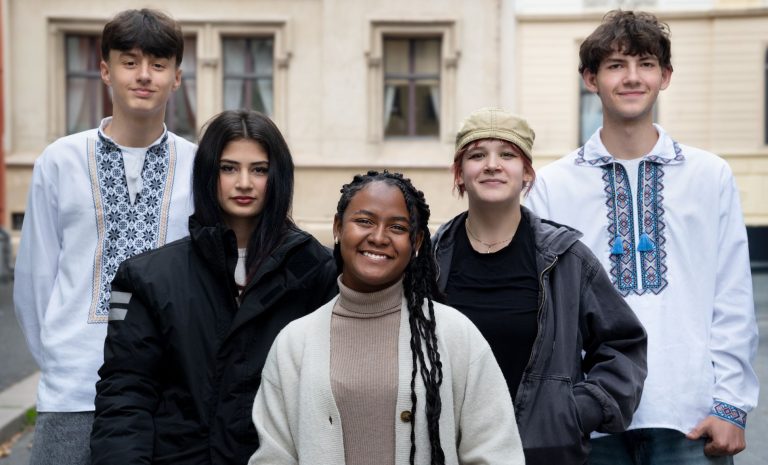
Young people aged 15–18 from the Ukrainian Step by Step Foundation (Ukraine), Corporación Memoria y Paz (Colombia), and ChangeFactory (Norway) led a session at a conference in Oslo organized by the Nordic Network for Global Mental Health.
The young people planned the session together online in advance, with support from War Child and ChangeFactory.
The young people explained the importance of giving children living in war and conflict the opportunity to contribute to the communities in which they live, and how this at the same time helps many children and young people achieve better mental health.
The theme of the conference was: From Response to Resilience: Strengthening Mental Health and Psychosocial Wellbeing Before, During and After Emergencies.
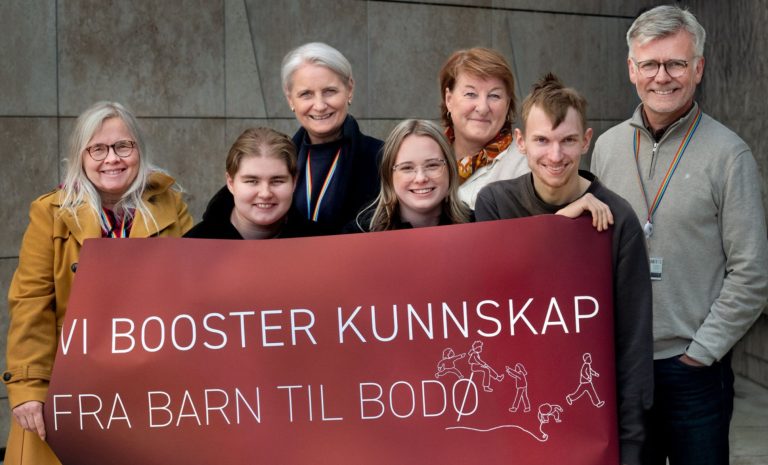
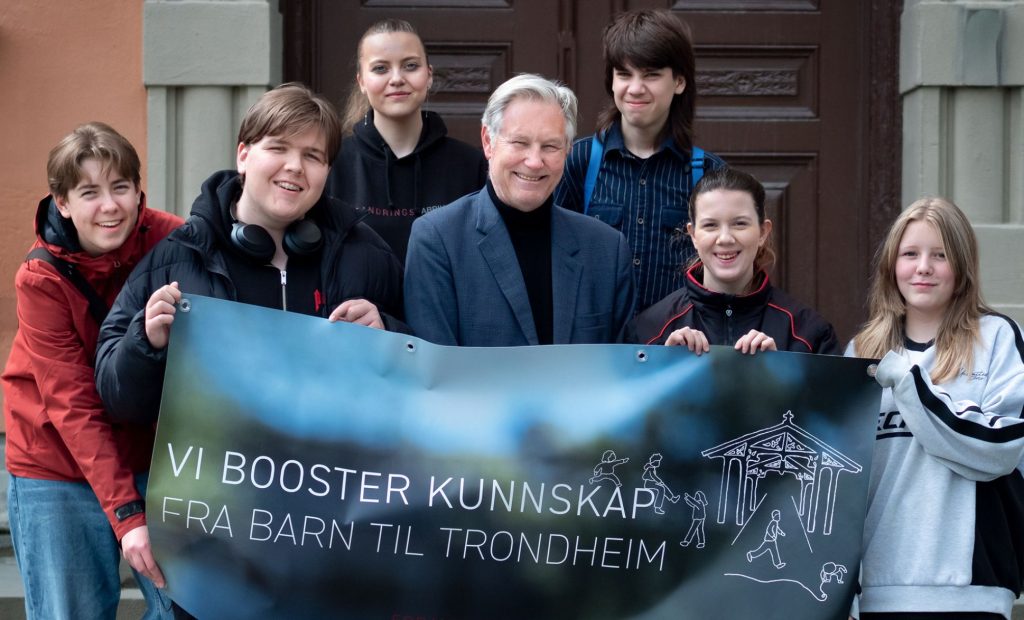
When politicians, heads of schools, sport teams or municipalities are making decisions that affect children and young people, they are obliged to take seriously the views of and solutions from groups of the children or young people concerned. This is why Changefactory has conducted BOOST events in several Norwegian municipalities this spring. The aim has been to boost and inspire with knowledge and insights from children.
The decision-makers met with young people in Changefactory to listen to them present and explain solutions from groups of children and young people. When children participate meaningfully, everyone benefits. Involving children in decision-making leads to better solutions and outcomes, both for children and for society.
Decidewithus.org is a website that inspires national, local, and school decision-makers to involve groups of children and young people in decisions that affect them.
The website consists of films where young people and decision-makers explain why involving children in decision-making is important.
The website was developed as part of the project No Decisions Without Us, funded by Nordic Culture Point. Young people from the organisations Unga Örnar (Sweden), Danske Skoleelever (Denmark), and ChangeFactory (Norway) were part of developing the website.



Children and young people have advice and opinions that adults need. Adults need this in order to be able to make good decisions for individual children and for groups of children, in collaboration with children. When adults want to listen, understand and take seriously the advice and opinions from children, actions and decisions concerning children can become wiser and more useful for those concerned.
The Knowledge Festival WHERE CHILDREN PAVE THE WAY happened in Trondheim, Norway. Children, young people and adults have for four days highlighted the knowledge that children themselves have. The mayor, Children and Education Commissioner, municipal council politicians, judges and lawyers, researchers, employees of the state administrator, leaders and professionals in schools, kindergartens, help-services, Youth Outreach Services and the police have participated in dialogues with children and young people with experience from schools, activities and help-services.


A very important goal for Changefactory is to raise knowledge from children to those who make decisions about laws and frameworks for all children in Norway. Pros and factory workers have collaborated with most political parties in the Norwegian Parliament in 2021-2025, and are very grateful for the way politicians in Norway have shown that they want to understand the views of the groups of children that decisions affect. Then there are differences in how these views are included in decisions: how they are assessed, emphasised and how this is documented, here the Parliament still has a way to go.
In June, Pros and young project workers from Changefactory thanked parliamentary politicians from six parties on both the right and left wing. These were great meetings, with different themes because there were different things to thank them for. Very grateful for that!
The election is approaching and Changefactory will keep a close eye on which parties are promoting children’s rights and which are promoting other issues that are important for children in different life situations, and for the future of those who will take over Norway.


The majority of the Parliament Committee for Children and families in the Norwegian Storting decided, as part of the consideration of the quality pledge for child welfare that the age of party rights for children should be lowered to 12 years by 2028 🎊 The committee invited the Foster Home Association, Save the Children, the Child Welfare Institutions Committee, The Norwegian Union of Social Workers and Changefactory to a celebration and as a thank you for having fought to strengthen the legal safeguards for children.
Changefactory has worked for many years to lower the age of party rights. Children must receive more information and the right to contradiction in their own case. Because:
- Party rights from the age of 12 will give children the right to information, to express their opinions about information from different adults and to share what is important. When children are well informed, they can express their views more easily and adults can make better decisions for children.
- Many reports have shown over many years that the Child Protection System is unable to make good enough decisions for children and at the same time ensure children’s procedural rights. The consequences of this have been significant. Therefore, children themselves must be a party to their case.
- The Children’s Committee writes in CO no. 13, para. 63 that involving children is an important part of protecting them.
- From the summarised views of children, party rights from the age of 12 will contribute to making decisions more accurate for children.
THANK YOU to the majority in the Norwegian Parliament, who took this very seriously 🥳

On 12-13th of May, the Norwegian authorities responded to questions from the committee in Geneva. The committee had taken the input from children under 18 in Norway very seriously. The committee justified several of its questions with knowledge from children, in the reports from the Children’s Committee. They thanked children in Norway in particular for having informed the committee in engaging ways. Tavar and Glorija from CF followed the reporting, to follow how the views of children were important in the hearing.
Norway’s reporting began more than a year ago. Civil society and children have contributed all the way. Changefactory has sent reports to the committee in two rounds, on the status of how children’s rights are secured in Norway, from the perspective of different groups of children in vulnerable life situations, in kindergarten and in school. In February, young people under 18 from the Children’s Committee participated in a pre-session, where they presented the reports and received questions from members of the Children’s Committee.
The committee asked questions about:
🤩How Norway intends to ensure that children’s views are included when laws are made
🤩Why Norway has not secured children’s procedural rights in all laws that apply to children
🤩Why Norway has not secured children’s rights better in barnahus
🤩How Norway intends to secure children’s rights in the health laws
THANK YOU to the Children’s Committee for taking children in Norway seriously🥳


CF recently met with the The Child Welfare Tribunal, judges of Norwegian Courts and the Municipality of Bergen in a workshop. The Centre for Discretion and Paternalism (DIPA) at UiB owns the project and this time the theme was CHILD-FRIENDLY PROCESSES.
How can decisions by the child protection system, the Child Welfare and Health Board and the courts work in a child-friendly way? What does it mean that something is child-friendly? What knowledge has to be the basis in order to call something child-friendly?
The Convention on the Rights of the Child (UNCRC) take precedence when other Norwegian legislation (special laws) conflicts with the UNCRC. What significance should the UNCRC and the general comments related to the Convention have in discussions about child-friendliness.
The Supreme Court of Norway has said that general comments should be given great weight where it says “shall”. The general comments describe what child-friendliness means. Should this then be given great weight? Such discussions must take place in the PARTICIPATION project, but also in other development work and projects that concern children in vulnerable life situations.

PARTICIPATION is a very 🤩exciting🤩 collaborative project between researchers at the University of Bergen, the DIPA Center, and four key partners to ensure good child protection services: 1)The Child Welfare Tribunal, 2) The Norwegian courts and their administration, 3) Bergen Municipality and 4) Changefactory (children and young people).
The following week, members of the Child Welfare Tribunal went to Belgium and the Netherlands to learn more about child-friendly processes. CF participated, to contribute with questions, from the perspective of children. The group visited courts and universities, and the topic was how the rooms and the conduct of conversations with children must be, to be called child-friendly. An important topic was also methods for including children in this work.
Link to the project: https://discretion.uib.no/childrens-right-to-participation/

In May, the Norwegian authorities will be “examined” by the UN Committee on the rights of the child in Geneva. Norway will then receive recommendations on how children’s rights can be better secured. This is based on input the UN Committee has received from organisations, Norway’s National human rights institution(NIM), the Civil Ombudsperson and the Children’s Ombudsperson 🤩

Bragi Guðbrandsson and Mary Beloff from the children’s committee with Pros and factory workers

Chair of the Children’s Committee, Ann Skelton, with Pros
Part of something bigger
NIM, the Children’s Ombudsperson, the Forum for the Convention on the Rights of the Child, the Stine Sofie Foundation and Changefactory were represented at the 100th Pre-session in Geneva.
The Forum for the Convention on the Rights of the Child (FFB) represents over 50 organisations working for children’s rights in Norway. They have produced a report and a children’s report, the other actors have produced their own reports.
The UN Committee on the Rights of the Child had invited children under 18 to a separate CHILDREN’S MEETING. Some of what children from Changefactory presented, based on views from different representative groups of children, in CF’s reports:
💫The authorities today do not ensure Article 12 well enough when measures, initiatives and frameworks are to be determined. Views from representative groups of children under 18 are rarely described, and then not openly considered or shown how they have been taken into account.
💫Too many children in Norway have too little trust in adults, to be able to speak safely or express themselves freely as stated in the Convention on the Rights of the Child, because the legislation does not ensure that children can tell, without the information they say being shared before it is agreed with the child
💫Norwegian laws do not describe children’s procedural rights in context, with the exception of the Child Welfare Act
💫The authorities justify the use of physical force, isolation, body searches, locked institutions and surveillance of children by saying that it must be done to protect, provide care and because it is in the best interests of the child. They are not allowed to do that!
We look forward to May when the UN Committee on the Rights of the Child will challenge Norway on how to ensure children’s rights ☺️

Thank you, the book will be read thoroughly, Erna said.
Several of the book’s authors met Erna Solberg yesterday to give her the book. Afterwards, she wrote this on Instagram:
Today I met 4 young people from Changefactory, who have been involved in creating this book. Their experiences with the help and treatment system, told by themselves. An extremely important perspective to have both in designing child welfare and mental health services.
The patient and user perspective is important in both helping adults and children, but children may need it even more. It is easier to overlook a young person’s point of view than an adult’s and adults often have a “more developed” conceptual framework. We in the Conservative Party have presented a plan for better mental health, which we call Help that helps – the young people said their goal was help that works. It will be useful to read this. Because as the young people said when we met – We who are standing here have each cost society millions, but the help has not worked. Now we want to help make the help work. Thank you, I will read thoroughly.
THANK YOU Erna for a nice talk and for wanting to read the book and work to make the help work!! 🌟

Minister for Children, Kjersti Toppe, was at the top of the list of those whom the authors would most like to understand the main aim of the book and the important explanations for the major challenges. These are challenges that exist in Norway related to young people who struggle and who end up in strong support systems. Equally important for the authors who met with the Minister for Children, was for her to understand all the possibilities that now exist, through the concrete solutions proposed in the book. And that both she and the ministry familiarise themselves with these. The authors asked her to consider the proposals carefully in the final part of the work on the Quality Reform. Kjersti and Maren thanked warmly for the book and promised to read it as best they could. Thank you for a great time with you!

In Norway, the Parliament invites to public hearings. To participate, organisations like Changefactory (CF) must apply for a place 🔖CF is an organisation that works to collect experiences and advice from representative groups of children and young people, about systems they have experience with. We summarise this as “knowledge from children”. This knowledge is presented by Pros (young people) from CF, in the hearings☺️❤️
In recent weeks, there have been hearings about the state budget for 2025📊Pros from CF have explained their point of view, and given input, from children and young people who are affected by the budget👏🏼 This has been well received, and after the hearings the young people were asked questions, both verbally and in writing 🤩
CF uses the public hearings as a way of helping Norway follow the UNCRC, which says that when decisions about children (under the age of 18) are to be made, the decision-makers must have spoken to *representative* groups of children and young people to whom the decision concerns❤️🔥Therefore, CF always gives input based on answers from children and young people regarding the matter, and make sure that enough children have been spoken to🥰

In the fall of 2023, Changefactory received support from the European Youth Foundation of the Council of Europe for a tool aimed at improving the accuracy of decisions and thus increasing the quality of systems for children and youth. This is done by inviting young people to develop a tool for political and administrative decision-makers to receive summarised advice directly from children and young people themselves. The advice can be part of the knowledge foundation for decisions that are important to them. This simultaneously contributes to ensuring the human rights of children and young people as a group.
In February and March, young people and adults from Changefactory visited decision-makers in two municipalities. During the meetings, young people presented concrete proposals on how politicians and decision-makers can involve MANY, DIFFERENT children and young people in important decisions the municipality needs to make. The young people then engaged in a dialogue with the decision-makers on how these tools can be used in practice.
THANK YOU to the decision-makers in Nittedal and Voss who are participating in this exciting work!