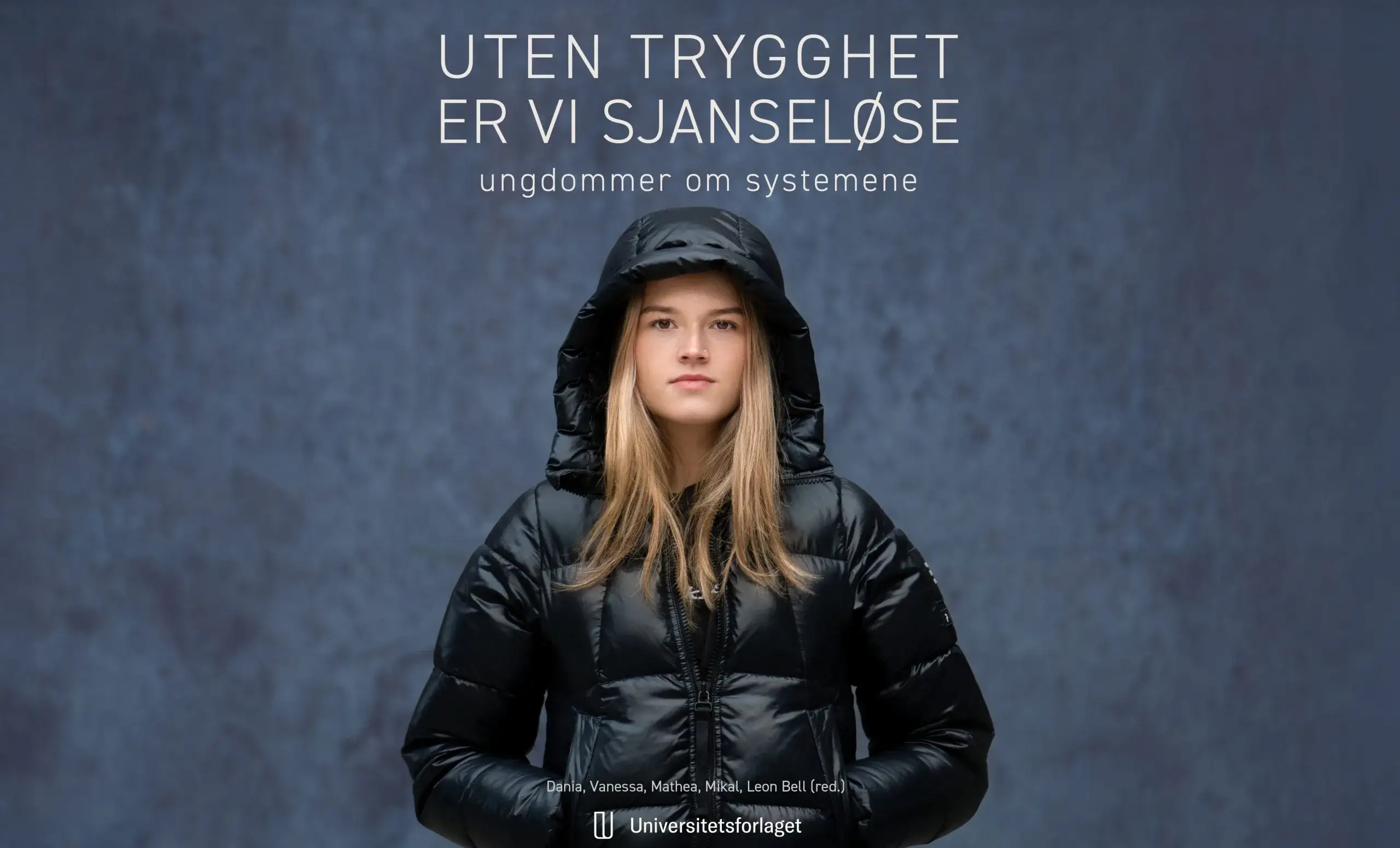
Foreword "Without Safety, Without a Chance" by Trond F. Aarre

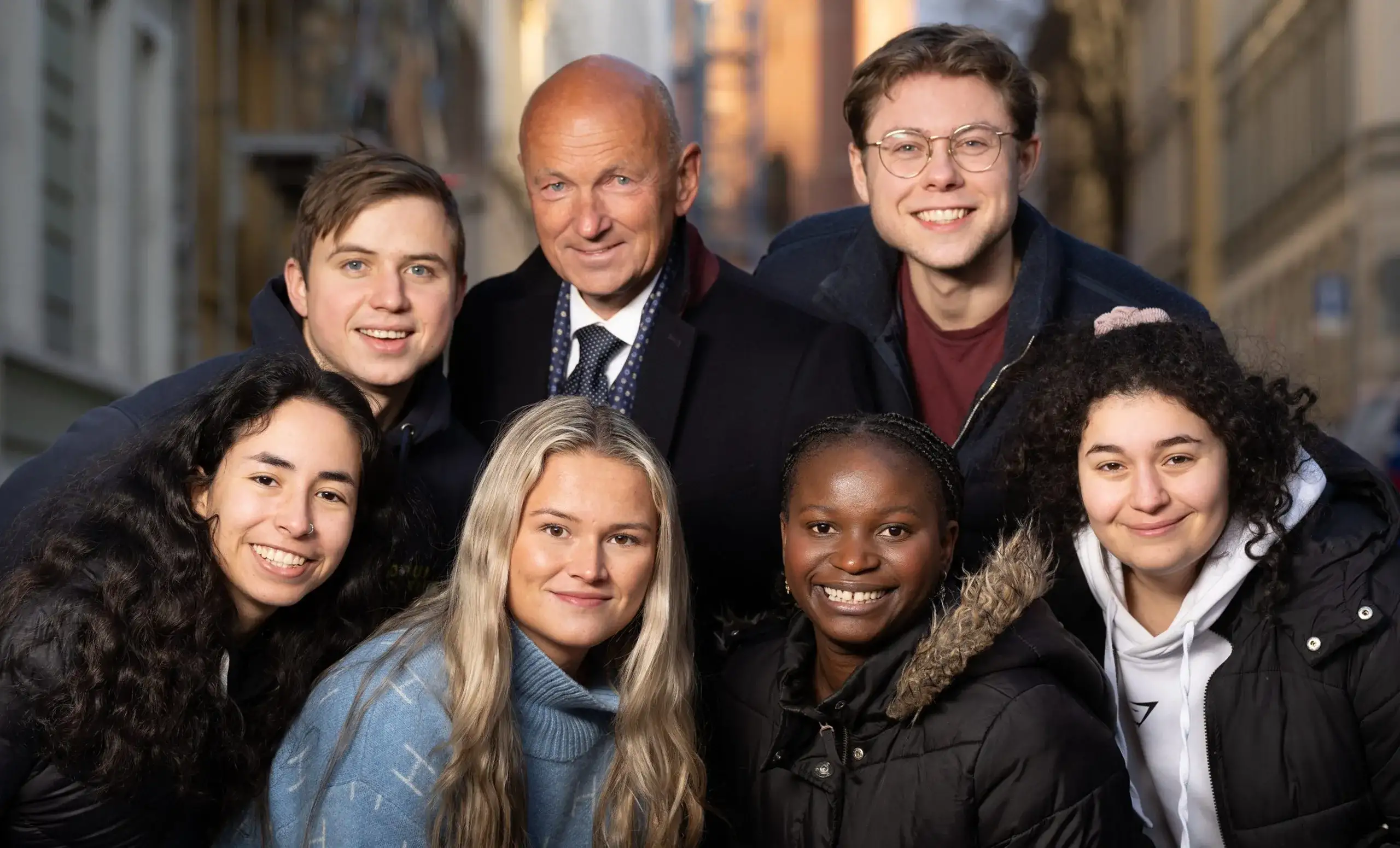
Trond F. Aarre together with five of the book’s eleven authors

“In the first part of this book, eleven young people write about the difficulties they have had in their lives, and how they have experienced measures that were supposed to help them. It is a shocking read. Services that were supposed to be good help have been experienced as the opposite. Young people who needed to be listened to and understood have felt that adults were not concerned with why they were having such a difficult time. Nor were the adults always interested in hearing their views on what could help.

The stories are naturally one-sided, as all credible stories are. The authors are not looking for objective, cold facts. They show us the services from their perspective, and they know very well that there are other ways of looking at this. They understand that it can be difficult to help, and that legislation and organisation set limits to what can be achieved. But something that is repeated in many of the stories is that they do not fully get to express themselves and do not receive the help they need to feel safe.

The quotes from journals, records and reports show us how great a distance there can be between what professionals are concerned with and what young people themselves experience. Regardless of whether the professionals are right from their perspective, the experiences of young people cannot be without interest. Measures that are experienced as useless are rarely of great help. The experiences, of the past and present, of relations and measures, are often absolutely central to understanding what the problem is about. We need to know of these experiences, even when they do not fit well with the services’ understanding of themselves. Knowledge of how services are experienced by those who will use them is indispensable knowledge for those who want to improve and develop the services.

In the second part of the book, the young people summarise the difficulties that can be experienced in dealing with the systems. This is based on their own experiences, but also on the results of surveys conducted by Changefactory, in which several thousand children and young people in public services have participated. Lastly comes what may be the most important thing in this book: the call to learn from the experiences the young people have had, and proposals for solutions. They want to help the services to meet young people who come after them, in ways that they themselves would like to have been met. They ask for a different form of professionalism than the one they themselves encountered.

The eleven young people therefore deserve congratulations and thanks for wanting to share their experiences with us. It is commendable that they are not content with pointing out what is not working so well, but also come up with proposals for how things can be improved. As I understand them, they are not concerned with getting revenge or redress, but want to do what they can to ensure that services are better for those who come after them. To achieve this, they must explain how things are connected. They must be allowed to describe what they have been subjected to, how they were met, and what is needed to make things better.

Most of the young people appear as authors with names and pictures. This has been each individual’s choice. I can assure the reader that they know what they are doing. Most have been active in Changefactory’s work to convey the views of children and young people on how school, child welfare, police and health services work for them. I know several of them personally through many years of collaboration with Changefactory. The individual author or their guardians have done what they thought was best, without others influencing their choice. We must believe that they themselves know what is best for them.

Changefactory has done pioneering work over the past 20 years by collecting experiences from young people’s contact with public services. There are few countries that can point to anything similar. I am currently a board member of Changefactory and have a special responsibility to ensure that it is safe for children and young people to participate in Changefactory’s many activities. I know the routines and the work the organisation does to ensure that it is safe to participate. The young people who come forward with their names and pictures know what it means. They believe that it is they themselves who should make this choice. I agree with that.

I myself am critical of many of the mediacoverage in which more or less well-known people “come forward” with the ailments they have. This book is about something different and more important. The eleven young authors do not want to get attention or sympathy from others. They are not looking to “give the disease a face” or raise awareness about one or another problem they have struggled with. As I understand it, they present themselves with names and pictures because anonymity does not serve their cause. They would rather be individuals – living people with their own identity, each with their own values ​​and preferences, each with their own personal story and each with their own difficulties. In their encounters with help services, they have experienced to a greater extent that they have been seen as representatives of a group of people, rather than as individuals with unique, personal stories.

I hope that you, who read the book, will be open to the authors’ experiences. They should be food for thought for everyone who works in the support system, and those who are responsible for managing the services. The experiences indicate that it is useful to think a little differently about the services and about those whom the services are intended to help. It seems obvious that the way in which young people are met does not always work as intended.

This is a challenge for all of us. The authors should be commended for doing their part to ensure that students, professionals, leaders and governments can see that much needs to change. But even if much in this book may seem negative, I would like to remind you that we live in good times – and finally take into account what the users of the services think. This is the only way we can change what the help services offer for the better.  In order to do so, the experiences of people must emerge. This must also apply to those who are young and therefore have not always been listened to by those of us who think we are older and wiser. This is an important book that shows both how services can affect children and young people, and how they can be improved.

Les Arcs-sur-Argens, May 2024″

Trond F. Aarre,
specialist in psychiatry and drug and addiction medicine
Changefactory's Privacy Policy

1. Introduction

Here you can read about what personal data Changefactory processes. Changefactory is committed to protecting your rights when we process personal data.

Personal data is all information that can be linked to you as a person, such as name, telephone number, photos, films and audio recordings.

2. Data controller

The CEO (in his/her absence, the chairman of the board) of Changefactory is the data controller for the foundation’s processing of personal data.

3. When does Changefactory process personal data about you?

Changefactory processes information about you when:

  • You, as a child or young person, participate in activities or projects with Changefactory where it is considered necessary to collect personal data
  • You (and possibly your caregivers) have consented to your participation in a survey
  • You are a member of Changefactory
  • You have applied for a job
  • A job seeker has listed you as a reference
  • You work at Changefactory
  • You have registered for an event organised by Changefactory
  • You are a journalist and we have had contact regarding statements, events, etc.
  • You have requested a lecture
  • We are going to have or have had meetings
  • You are a partner
  • We have contacted you regarding with recruitment for surveys
  • When you contact us via email, telephone, website or social media

4. What personal information we store

Changefactory does not collect and store more information than is necessary to fulfill the purpose of the processing. The personal information we collect is generally obtained from you.

Changefactory has good procedures for storing your personal information in a secure manner. This is done by storing the information in areas with access control where we limit who has access to the information about you.

You have the right to access the information that Changefactory has registered about you and can request that Changefactory update, limit, archive or delete information about you.

4.1. Children and young people

Changefactory is particularly concerned with protecting the rights of children and young people. We therefore have good procedures that ensure that the information we have about you is stored in a safe and secure manner.

4.1.1. Survey participants

When you agree to participate in a survey where we talk to you outside of school, we need some information from you so that we can contact you. We will always ask if it is okay for you to participate in the survey and for us to store information about you. In this way, you consent. Your contact information is stored on a disc that only those working on the survey have access to. The information is deleted when the survey is completed and the report is complete.

When Changefactory conducts surveys outside of school, this is done, among other things, by talking to you in an interview. The minutes from the interview are initially anonymised immediately, and no later than the same day the interview was conducted. This means that any personal data in the minutes that can be linked to you as an individual is removed.

The processing basis for processing personal data when we conduct surveys is either Article 6(1)(a) of the General Data Protection Regulation on consent or Article 6(1)(e) on public interest. Letter a of consent means that you (and guardians for you under 16 years of age) have agreed that you can participate in the survey and provide us with the information. Letter e of public interest means that Changefactory is allowed to process the information pursuant to sections 8 and 9 of the Norwegian Data Protection Act, because it is necessary for purposes related to scientific or historical research.

4.1.3. Member register

When you register as a member of Changefactory, we register your name, date of birth and telephone number in our member register. The basis for this processing is the data protection regulation art. 6 no. 1 letter a regarding consent. We store this information about you in order to be able to provide you with information and offers related to membership. The information is stored on a disk that only factory workers working with members have access to. The information is deleted when you are no longer a member.

4.1.4. Especially about photos, films and audio recordings of children and young people

Changefactory invites children and young people to take photos, films or audio recordings (e.g. podcasts). This is done as part of disseminating knowledge from children and young people. Before we do this, we obtain written consent from the child and from the caregiver for those under 16 years of age.

Changefactory publishes pictures, films and audio recordings with children on our websites, social media, public streaming services and in reports. CF obtains written approval from children and young people for the use of pictures/film and for where the picture/film can be published.

The basis for processing this is basically the Privacy Regulation art. 6 no. 1 letter a on consent and exceptionally letter f on legitimate interests. Pictures, films and audio recordings are deleted when the child or caregiver requests it.

4.1.6. Caregiver for children under 16 years of age

When a child or young person is under 16 years of age, we also obtain consent from caregivers to process personal data about the child. Changefactory then receives contact information for the caregiver from the child.

The basis for processing is the Data Protection Regulation art. 6 no. 1 letter b because the processing is necessary to fulfill an agreement to which the data subject is a party. The information will be deleted when the child reaches the age of 16 or in accordance with point 4.1.1 or 4.1.2.

4.2. Job seekers and employees

4.2.1. Job seekers

If you apply for a job at Changefactory, we need to process information about you to assess your application. The recruitment process involves processing the information you provide to us through the documents you send us, including your application, CV, diplomas and certificates. In addition to any interviews, Changefactory may also conduct its own investigations, for example by talking to references.

To assess applications and other submitted documents, conduct interviews and call references, the basis for processing is Article 6(1)(b) of the General Data Protection Regulation. This means that we may process personal data when it is necessary to take measures at the job seeker’s request before an agreement is concluded.

If we also conduct other investigations, for example by calling someone who has written a certificate and who is not a reference, the basis for processing is Article 6(1)(f), which allows us to process information that is necessary to safeguard a legitimate interest that outweighs the interests or fundamental rights and freedoms of the individual. The legitimate interest is to find the right candidate for the position.

Applications will be deleted no later than when the recruitment process has been completed.

4.2.2. Employees

When you are employed by Changefactory, we process some personal data about you. This includes contact information, information needed for payment of wages and police clearance. Changefactory has routines for deleting user accounts, including e-mail and formatting of PCs, when an employee leaves.

The basis for processing contact information, information needed for payment of wages and police clearance is Article 6, first paragraph, letter b, stating that it is necessary to fulfill an agreement and Article 6, paragraph 1, letter c, stating that the processing is necessary to fulfill a legal obligation.

Information that we are obliged to keep under the Norwegian Bookkeeping Act is stored for 5 years, which is the requirement under the law.

4.3. Other

4.3.1. E-mail

We use e-mail in much of our work. CF has its own email accounts for employees, which are only used for as long as an employee works at CF.

We ask that you do not send special categories of personal data unencrypted by email. This is, for example, personal data about racial or ethnic origin, political opinion, religion, or health information.

4.3.2. Lecture agreement

If you have requested a lecture or similar for your business, we will store your contact information for the current and following years. The purpose is to plan and administer lectures, keep an overview of and follow up on completed lectures and prepare anonymous statistics for reporting and internal prioritisation and planning.

The basis for this processing is Article 6(1)(f) of the General Data Protection Regulation, which allows us to process information that is necessary to safeguard a legitimate interest that outweighs the consideration of the individual’s privacy. The legitimate interest is to administer, keep an overview of and follow up on lectures and prepare statistics.

4.3.3. Registration for events

When registering for an event, we will ask for information about your name, contact information and place of work. The purpose of the information is to provide information to participants, administer and organise events, prepare participant lists, follow-up of participants afterwards and for anonymous statistics for reporting.

The basis for processing is Article 6(1)(f) of the General Data Protection Regulation, which allows us to process information that is necessary to safeguard a legitimate interest that outweighs the consideration for the individual’s privacy. The legitimate interests are to carry out events in a good manner.

4.3.4. Partners

We process contact information for our partners. The purpose is to be able to arrange meetings, events and disseminate knowledge.

The basis for processing is Article 6(1)(f) of the General Data Protection Regulation, which allows us to process information that is necessary to safeguard a legitimate interest that outweighs the consideration for the individual’s privacy. The legitimate interests are to be able to contact our partners.

5. Your rights

Changefactory processes your personal data in accordance with the Personal Data Act and applicable regulations.

You have the right to access the information that Changefactory has registered about you, and you can request that the information be updated, archived, restricted or deleted. We have routines for deleting and archiving personal data.

You can object to the processing of the personal data we have registered about you. You also have the right to complain to the Data Protection Authority when processing personal data that is not in line with the rules.

6. Contact information

To request deletion, correction or access to personal data, you can send an email to samtykke@forandringsfabrikken.no.

If you have any questions or other inquiries, you can contact:
Viola Gunvaldsen Breunig
Legal advisor
Tel: +47 977 44 911
Email: viola@forandringsfabrikken.no